Kirby Air Riders
I bought the game on its release and have played it daily, and I still can’t believe there’s a sequel to Kirby Air Ride. After 22 years. Holy stromboli. It’s like a Christmas miracle. My stupefaction aside, gamers have been debating whether Kirby Air Riders is good and where it stands compared to other racing games. I figured I’d give my two cents on the game, because I’m a lover of the original game.
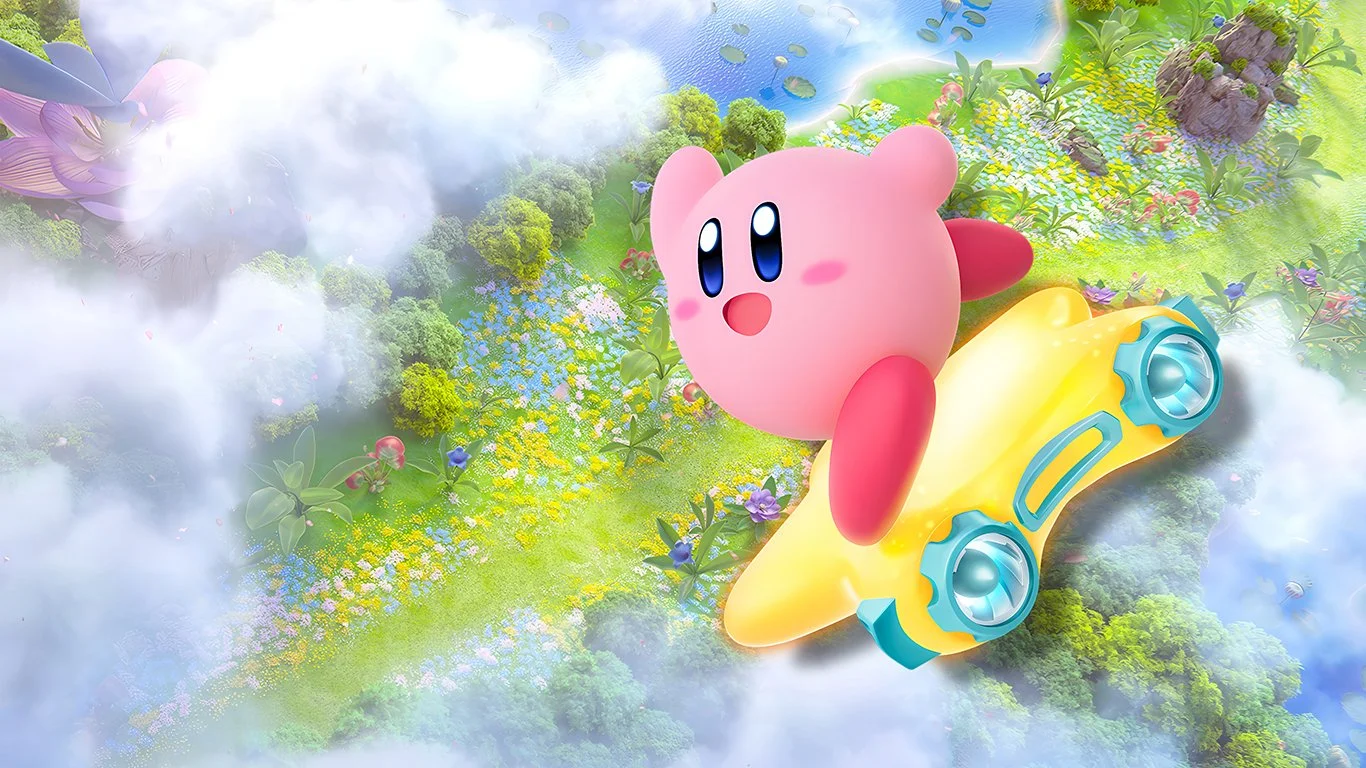
Kirby Air Riders is a fantastic game. It lives up to the original and then some; whereas Kirby Air Ride had three modes, this game has five. There’s Air Ride, which is straightforwardly racing along certain tracks; there’s Top Ride, which is the same but from a top-down view and with tracks with simpler designs; there’s City Trial, which is a “race” confined to a large map with stat-boosting and machine-searching being the objective rather than reaching a finish line (both of which are taken into a Mario Party-like minigame once the timer runs out); there’s Road Trip, which is a quasi-gauntlet of randomized minigames and events alongside a storyline; and there’s Online, which is all of the other modes but with other online players. Each mode has a swath of checkboxes or “achievements” that unlock songs, playable characters, new tracks, new machines, and other collectables such as decorations for machines. Speaking of decorating machines…
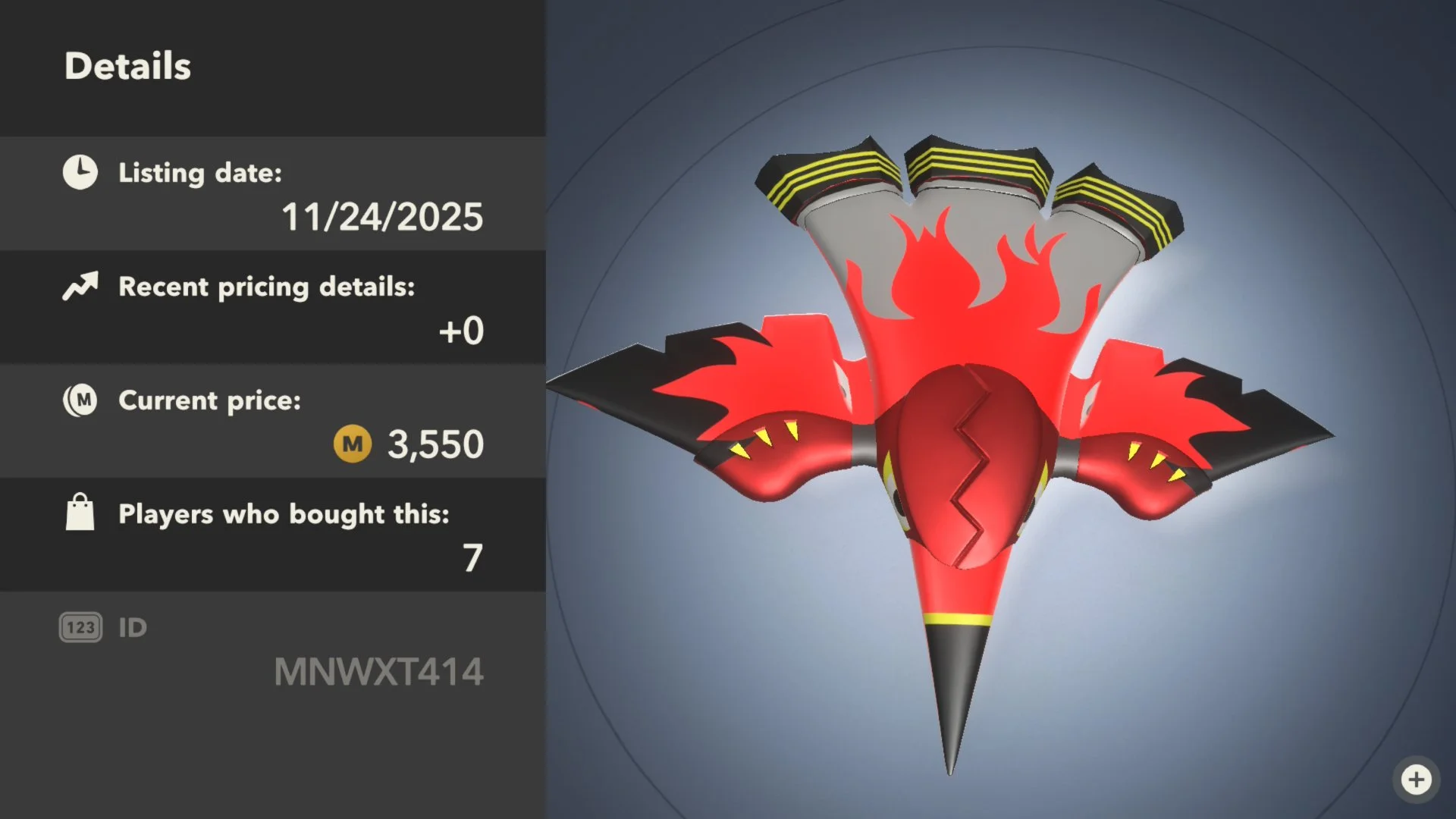
Machine customization is crazy. It’s awesome, and has arguably taken up most of my time rather than any of the actual modes for playing the game. I love it. I’ve put a Bombette from Paper Mario 64 on my Wagon Star, a Sluggy the Unshaven from Yoshi’s Island on my Warp Star, and a Doopliss from Paper Mario: The Thousand-Year Door on my Shadow Star. Customized machines can also be put on an online market for others to buy and use for their own game, which is also awesome. People have been wildly creative, like making a Millennium Puzzle (from Yu-Gi-Oh!) out of their Swerve Star or a Latios (from Pokemon) out of their Hop Star. These machines can also be displayed in a player’s personal “garage” which itself can be customized (sort of). Suffice to say, the extras outside of the five modes are great.
That’s the overview, so let’s briefly talk about gamers’ reactions. People compare this to other racing games which I think is a mistake. This isn’t just a racing game; it’s a survival game, it’s a combat game, it’s a competitive game, it’s a casual game, it’s a PvP game, it’s a PvM game, it’s a single-player game, it’s a multiplayer game, and it’s an RPG game. It’s wonderful, as the conglomeration of it all creates something that’s not a mess but something chaotically fun just like the original. The only other racing game I’ve played that people compare it to is Mario Kart World which is pretty different. MKW brought some new features like an explorable open world and Knockout Tour, which are both pretty cool, but it overall has very limited entertainment value in the way of single-player gameplay. Kirby Air Riders does more in the way of putting desirable content behind achievements players need to do; it also, somehow, for the most part, equalizes the randomness to make games fun and fairly winnable for anyone without it being punishing or feeling unfair to players even with skill unlike MKW items (cough blue shell cough shock).
Aside from all I’ve described, there are some differences between Kirby Air Riders and its predecessor that I want to acknowledge particularly in City Trial. The controls or feel of the character and machine you play with are a bit more slippery, though I lend that difference to the change in how you can control the speed of breaking by tilting the control stick either up or down. Having your machine destroyed is also more forgiving, as machines spawn more plentifully and the nearest will fly closer to you for you to be able to get back into the mix quicker. Generally, items also spawn more plentifully, and it’s typical to finish a round with over 50 (even over 100) stat-boosters. The new map for City Trial, Skyah, is great and has its own “secret” areas like the old City Trial map; it also has subtle random changes every round, like holes in the ground either being open or closed, the volcano being either normal or having unnatural, ominous patterns in it, and sky islands that may or may not appear around the map. There are different characters (aside from Kirby) you can play, each with varied abilities (and who you can customize with HATS); there are also two new legendary machines I won’t expand on for the sake of avoiding spoilers.
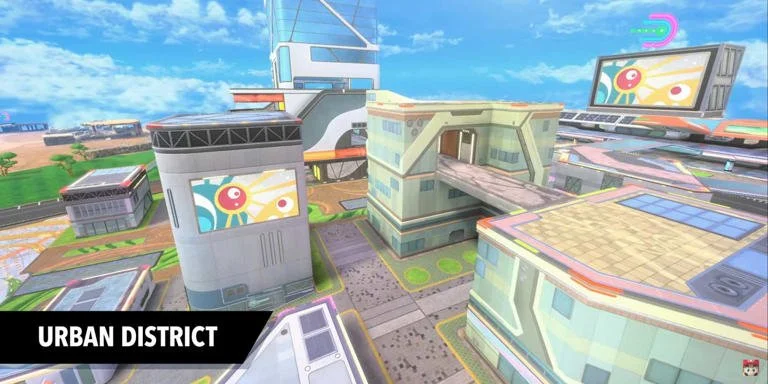
There are some things I sort of miss from the original game, as a matter of preference: the items and machines being less available (i.e., their scarcity makes them feel more valuable); the legendary machine parts having a somewhat more reliable method of gathering in that red boxes that spawned in particular locations had more reliable drop rates (whereas in Kirby Air Riders it seems all red or rare boxes have the same random chance of containing a machine part); and, this may be my nostalgia-goggles, the map feeling larger. Skyah is definitely substantial, and arguably the same size or bigger than the map in Kirby Air Ride, but, with how quickly movement is (due to added slipperiness and an item surplus), it feels kind of small. That said, these are all nitpicks; I’m still in love with it all. When the game was first announced and expanded on in Nintendo Direct announcements, I had hope that it would bring back the old city trial map. I’ve since changed my mind, as it’s nice that this game leaves it in the past and does not fully render the original game obsolete; it also makes sense, as having multiple maps would likely dilute enjoyment in the singular map.
So, yeah, this game is everything I wanted and more. It, alone, was the reason I bought a Nintendo Switch 2, and it was worth it, and I love it. The rest is confetti.