Storytelling with Dreams
The use of dreams in stories has long intrigued me. On one hand, dreams offer insight into a character’s history or thoughts and emotions (typically their desires or fears). On the other hand, dreams inherently lack stakes. Stories can counter this shortcoming by demonstrating real consequences derived from a dream, even if indirect. I’d like to consider some of these stories and determine whether dreams were used effectively or not.
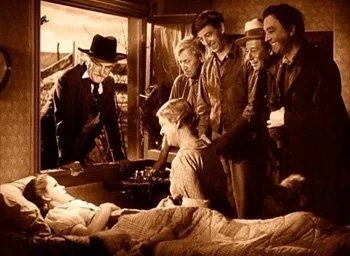
In The Wizard of Oz (the movie), the majority of events are a dream. While that may feel anticlimactic to some, the story successfully develops the main character (Dorothy) in such a way that she is different at the end than she was at the beginning. Functionally, the dream provided her development from restlessness and yearning (concisely conveyed in her singing “Somewhere Over the Rainbow”) to self-assuredness and satisfaction with what she had. The character development and themes parallel the story of the musical Pippin, though notably these two stories differ in the manner of their narrative of events—namely, The Wizard of Oz having its main plot within a dream. I think it works and is successful, both because the dream is entertaining in its various events and that there is demonstrable character development.
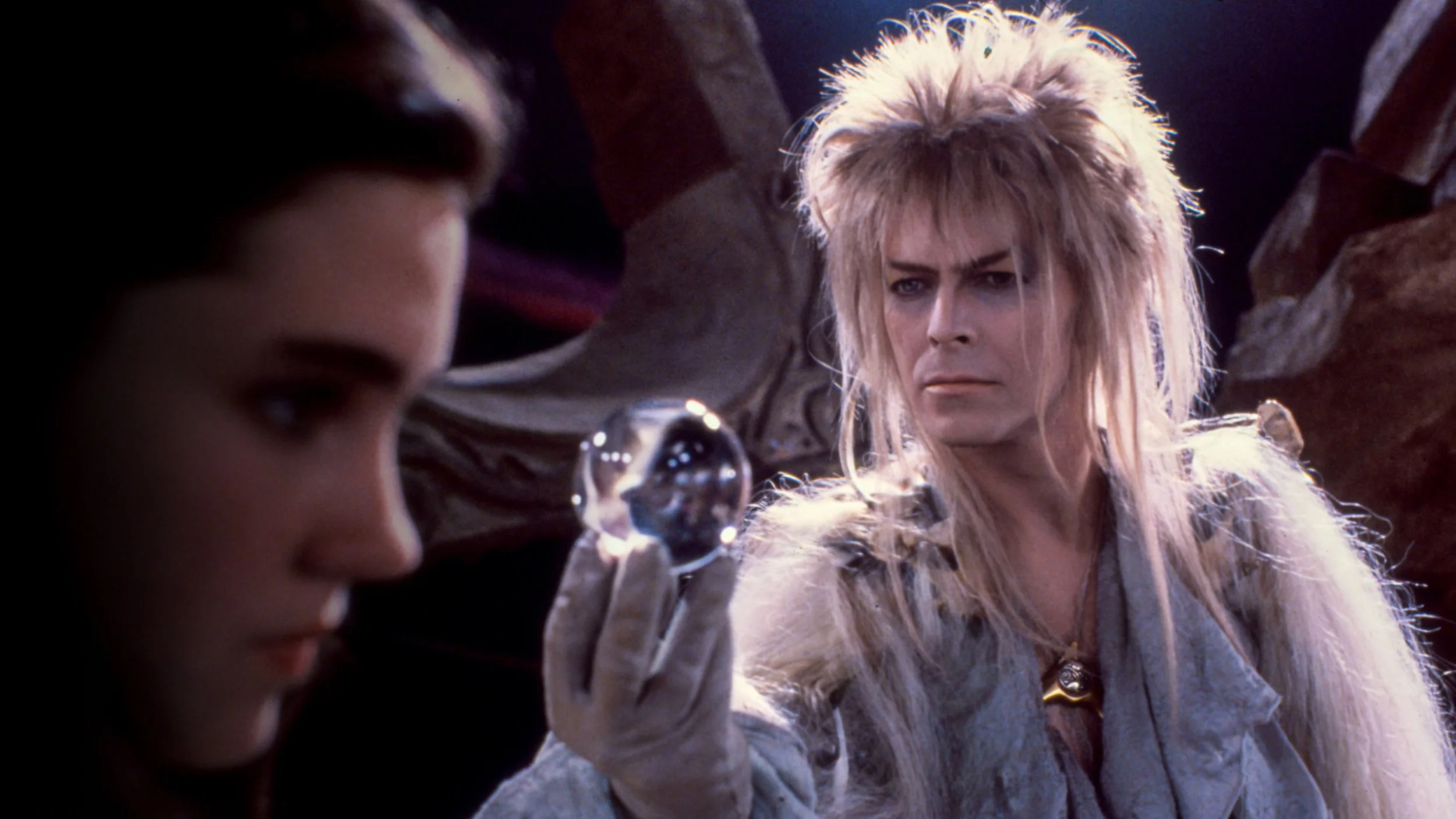
Some stories blur the lines between dreams and reality and leave things ambiguous. In Labyrinth, the main character (Sarah) seemingly incites a fantastical journey when she speaks “the words” for the Goblin King (Jareth) to take her baby brother away. Whether she truly traverses a labyrinth, befriends various creatures, and reclaims her brother are left up to interpretation, however, dream or not, Sarah is considerably different between how she was at the beginning compared to how she is at the end. Functionally, the maybe-dream provided her development from being immature (namely selfish and fearful) to being mature (namely responsible and confident). Her immaturity is addressed in many ways, the most entertaining of which is when she repeatedly claims things are unfair to which Jareth eventually responds, “You say that so often, I wonder what your basis for comparison is.” I think the story works, even as a dream, again because the events are entertaining and there is demonstrable character development.
Another story with surreal dream-like storytelling is The Boy and the Heron. In it, the main character (Mahito) undergoes a fantastical journey through a tower to find his aunt. Whether he truly experiences anything going on in the tower (it’s way too messy to get into it all here) is left up to interpretation. This story differs from the previously discussed ones; even if the majority of the story is a dream, the events are not entertaining and there is no demonstrable character development. The jumble of events don’t meaningfully address his grief for his late mother, his transition to living in a new place with a new family, or any of his other thoughts/feelings messily symbolized by the tower and his grand uncle. In short, Mahito starts the story as an affectionless kid in grief and ends the story as an affectionless kid in grief. So, the story functionally does not work and is unsuccessful.
Taking a brief break from dreams being a literary device providing indirect development for plot and characters, Inception is a story where dreams directly (i.e., literally, actually, synonyms) develop the plot and characters. For one, going too deep into dreams causes characters to be lost in “limbo” (which actually would cause characters to sleep indefinitely (and actually makes one particular character so crazy that when she is actually awake she actually kills herself)). For another, the underlying goal driving the movie is planting a thought in a character’s head via his dreams which in turn has the character actually experience the thought when awake. Anyway, this story is not exactly in line with this topic of dream sequences (truly unreal events that don’t directly reflect or affect the real characters/plot) as a literary device, but I figured I’d mention it.
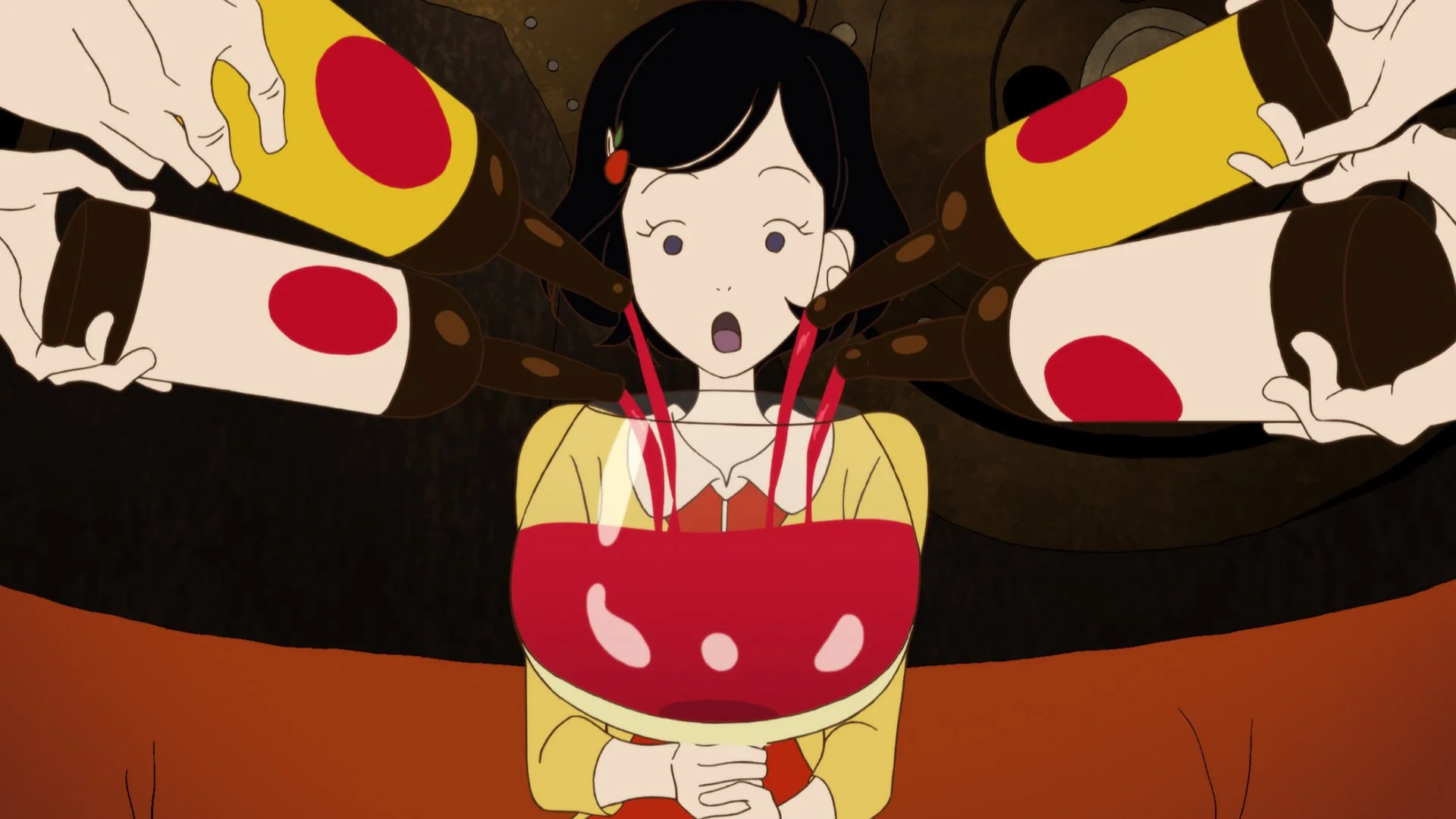
Another surrealist story is Mulholland Drive which I can’t really explain as it was too incomprehensible for me to bother attempting to understand it. Why am I mentioning it here? Because its events potentially being in dreams means that it was a story that didn’t work and unsuccessfully used dreams as a literary device. I’ve so far emphasized the effectiveness of dreams being demonstrated in entertainment value and character development, though surrealism is another element that may or may not factor into dreams being an effective literary device. In the case of Mulholland Drive and The Boy and the Heron, the surrealism negatively affects the story to make it incomprehensive or unmeaningful. Another movie that I’d grant being somewhat more successful in employing surrealism is The Night is Short, Walk on Girl in that the events are more discernable in being relevant to the underlying characters and plot; while visual shenanigans and wild alcoholic activities occur, “Senpai” develops from attempting to pursue “The Girl” and they both differ towards the end of the story from how they were at the beginning. And another example of a story successfully using surrealism and dreams is Gerald’s Game, much for the same reasons as the 2017 movie Ghost Stories (more on this movie in the next paragraph) in that horror elements are enhanced (e.g., dread, pity, despair).
Finally, the most notorious use of dreams in storytelling is when dreams are used for the sake of subversion. “It was all a dream” is subversive when events that were previously understood as having happened didn’t really happen. Both The Wizard of Oz and Labyrinth do this, however they notably don’t only use dreams for subversion (i.e., the dreams indirectly impact the characters and plot as opposed to not impacting them at all). An example of a less successfully-used “it was all a dream” subversion trope is Ghost Stories in which all the events are revealed at the end to be happening in the main character’s mind who is actually in the hospital in a coma. I think it’s less successful due to the events not really amounting to anything for the character—however, the subversion does alter the audience’s understanding of the character and plot in a pitying, depressing sort of way which is entirely fitting for the horror genre, so I wouldn’t say the story is not successful. There is also the fact that the events are entertaining (in the sorts of ways also fitting with horror).
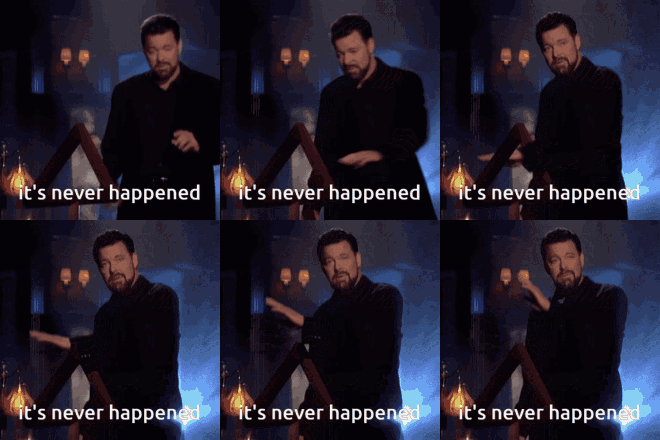
Maybe the worst use of dreams as a tool of subversion (i.e., the audience is unaware the events are a dream) is when meaningful developments that occur within the dream are reset when it ends. Such cases underline the lack of stakes or consequences dreams provide and bring about attitudes about the dream being a cheap method to stir up emotions. For instance, having a character die and then you get a rug-pull in which the story essentially goes, “Ha, just kidding! That never happened!” is annoying to say the least.
It’s somewhat ironic, stories of fiction being unreal are well regarded, yet unreal sequences within unreal stories aren’t well regarded. I think the reason dreams in fiction are disliked is because they tend to break the trust the audience has with the story. This is in a similar vein as the unreliable narrator. When an audience experiences a story, they want to experience it—not pretend to experience it. So, to the audience, the story is real. If the story employs elements that cheapen the experience, well, obviously the experience is cheapened. If the story goes back on what happened, the audience’s experience of what happened is rendered pointless. People don’t like to think of themselves and what they think as being pointless. Subsequently, the audience becomes primed to regard remaining events warily. Their desire to engross themselves in the story is inhibited; fool me once, shame on you.
That covers just about everything I can think of in why dreams are included in stories and how dreams affect stories. I suppose one last thing to say about why dreams are used is that without a dream the narrative seemingly runs dry. This is a considerable pitfall for dreams, as their use simply as a variance from other narrative storytelling (e.g., thoughts, action, exposition) makes them otherwise pointless. If the story requires a change in the narrative without offering anything else, that speaks to the story not offering anything else (or offering too little). Maybe it’s an overcorrection to the fear writers have regarding people and their decreasing ability to sustain attention. For sure, in a time where literacy is in decline and more immediate forms of gratification are sought after, inserting a cheap dream to instill interest without affecting or compromising the rest of the story’s plot makes sense. But, a dream only for the sake of variance compromises other elements that make stories gratifying in the long-term. There is a difference between slow and boring, and writers must be prudent when determining which is true for their stories and, if either are a problem, how they can be addressed. Dreams are one possibility.