Dialogue
Following my thoughts on storytelling with dreams, I continue to have thoughts on other narrative “modes” or styles. There seems to be at least five broad categories of a narrative (i.e., the way a story is told): action, thought, exposition, description, and dialogue. Each category could be expounded on extensively, but right now my thoughts gravitate more towards the style I tend to favor: dialogue.
There is a ton that can be conveyed by what a character says and, to me, one of the most interesting parts of a story is when characters actively interact. Dialogue sort of straddles the line between the other narrative styles, particularly thoughts and actions (or explicitly and implicitly telling the audience what a character is thinking). I favor dialogue because I tend to disfavor overly explicit thoughts or overly vague actions (i.e., the extremes of telling and showing). Here are breezy examples of both extreme narrative styles following the made-up character David:
Thought: That kid really pissed me off. Mouthing off to me when I was just trying to help. Where does he get off?
Action: David frowned and clenched his hands. He unclenched them and sighed.
Don’t get me wrong, personal, quiet moments that involve a thought and/or action are called for every now and again, but I’d prefer gathering the information about David’s thoughts either through his interaction with this kid or his subsequent interactions with anyone else. Of course, dialogue itself can also be both too explicit and too vague. Another breezy example of both in dialogue:
Dialogue: “I’m so mad! That kid sucked! All I did was fix his bike! He yelled at me! What’s wrong with him?”
Dialogue: “Mmm.”
So, while dialogue has the benefit of being either explicit or implicit among other things, this benefit is a double-edged sword. Because dialogue spans multiple things it then has to perform those things well. For example, the narrative styles of description and exposition only run the risk of providing too much or too little in their particular domains (i.e., describing current things vs. describing past things). Dialogue runs those risks in both domains and further domains, namely talking too much or too little or too unnaturally. This begs the question, what makes dialogue good and bad? Off the top of my head, good dialogue balances (1) conflict, (2) exposition/description, (3) world building, (4) plot progression, and a character’s (5) manner of speech and (6) personality. Take this quote from Hamlet:
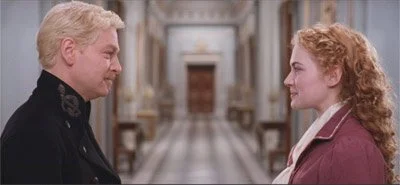
“Get thee to a nunnery.”
There is plenty of story leading up to this quote that provides context, though this dialogue does well in balancing many of the aforementioned elements: (1) it highlights the conflict the story and Hamlet’s character are undergoing regarding his mother’s swift remarriage to his uncle, (4) it serves as a break-up between Hamlet and Ophelia while essentially urging her to forego serious relationships evermore, and (5-6) it provides the blunt, bitter wit of his manner of speech alongside insight into his bitter and witty personality. Of course, this interaction directly follows his renowned “To be, or not to be” monologue which arguably includes and balances every one of these elements. Without getting too into it, Hamlet notably does not drone on explicitly about the events that happened preceding his monologue, but he certainly alludes to them (and what’s to come).
Thus, bad dialogue doesn’t balance these elements well. This could look like dialogue being inconsistent with the manner of speech a character has, their personality unnaturally changing, or the verbalized matter of detail, exposition, or world building being excessive. Imagine the scene Luke Skywalker alone longingly gazes at the horizon of his desert planet with two setting suns and instead of his conflict and emotions being conveyed quietly he said to himself, “I want to leave this place.” Imagine the scene Harry Potter looks out his dormitory window on his first night at Hogwarts and instead of his thoughts and emotions being conveyed quietly he said to himself, “I feel like I actually belong at this school.” These are hypotheticals of dialogue being excessive, so here is a real example of such dialogue:
“Father, when can I leave to be on my oooown? I’ve got the whole world to see!”
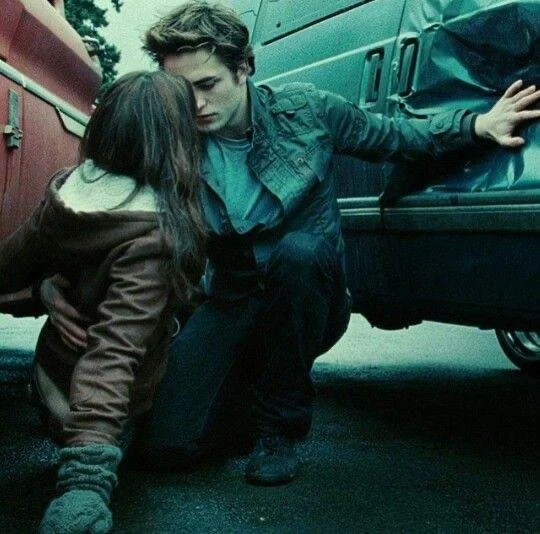
I haven’t seen “Pinocchio: A True Story” and don’t have the full context of the dialogue (nor do I really want to), but I’ll grant that the manner of speech (restless and whiny) probably fits Pinocchio’s character for the movie—that said, this quote was heavily memed for a reason. Explicitness can work in the right context, particularly for characters who are processing something; in Twilight Bella verbally reviews all the research she did on the unnatural occurrences she’d witnessed around Edward Cullen which led her to “know what he is” and then he challenges her to “Say it” (i.e., call him a vampire). As infamous as the books/movies are, I’d argue this dialogue works because she’s actually processing it, providing world building that the audience only got glimpses of, and pushing Edward to come clean about himself which in turn furthers the plot as well as their characters’ development. Going back to hypotheticals, imagine if in the earlier scene in the book/movie when Edward stops a car from hitting Bella with his hand she responded by saying, “Did that just happen? That just happened. You stopped that car with your freaking hand!” You can argue she’d be processing it, but it’d be unnaturally and excessively explicit (as well as said in a cliche manner).
Opposite the examples I’ve given so far, my personal pet peeve with dialogue is when it is insufficient. That is, when dialogue is given it is breezy and really calls attention to how it’s only serving to move the plot without a thought about natural progression and character development. Taking an obvious example from Star Wars again, this time from The Rise of Skywalker:
“Somehow, Palpatine returned.”
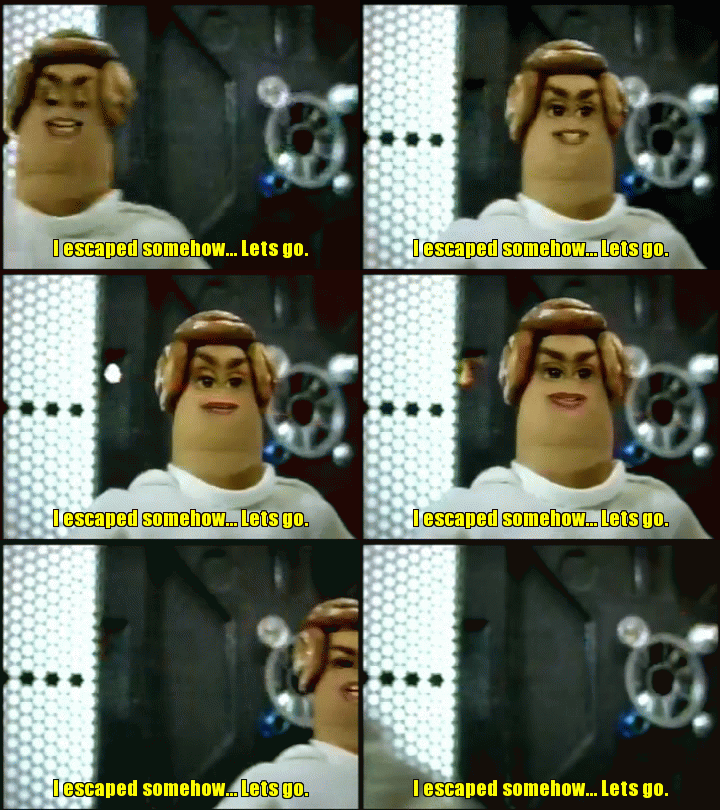
This line is bad on several levels, as it’s spoken in a mundane manner, the characters don’t reasonably react with dread or horror at the development, and no description, exposition, or world building is given to explain it at all. “Somehow” does the heavy lifting in brushing aside all those pesky details. Of course, just about any explanation would be difficult for the audience to suspend their disbelief for (namely because the original trilogy (and prequels) already concluded Luke, Anakin/Vader, and Palpatine’s arcs). It’s ironic, as there is a parody film Thumb Wars that has such a line spoken by Princess Bunhead (the parody version of Princess Leia) after being captured by Black Helmet Man (the parody version of Darth Vader) that directly mocks breezy dialogue:
“I escaped somehow. Let’s go.”
Another form of breezy (bad) dialogue occurs with the trope of miscommunication. This is most often a flaw in romances, when the writing doesn’t convincingly portray a realistic/natural human tendency to misinterpret and misspeak from which conflict abounds. Begrudgingly, I refer again to Twilight (specifically New Moon) which provides a fair example of miscommunication done well: Jacob tells Edward that Bella’s father is at a funeral, misleading Edward to believe Bella is dead which in turn sets him on the path of vampire-assisted suicide in the story’s climax. There are certainly flaws in character writing outside of dialogue—for example, the foolishness of Character B when Character A says, “I can explain!” and Character B refuses and prevents any explanation—but this is strictly about dialogue. Using Characters A and B, bad dialogue would look like Character A attempting to explain something, let’s say his sister was changing in his home’s bedroom and his wife walked in on her without knowing who she was, but failing spectacularly (aggravatingly):
Character A: “I can explain!”
Character B: “Well?”
Character A: “I made a mistake!”
Character B: “No kidding?”
Character A: “She’s using the room to change, that’s all! I’m not hiding anything!”
Let’s leave how the scene may progress from here up to the imagination and focus on these lines. Character A is frustratingly stupid here because he’s not saying the obvious thing immediately: the woman is his sister. Instead of getting the obvious thing out of the way, he affirms whatever mistaken assumptions could stem from a wife walking in on an unknown woman undressed in their bedroom by saying he did something wrong. Just that would be enough for the audience to understand the wife if she decided to forego whatever else he had to explain. But, the bad dialogue continues with more lack of explanation of who the woman is and states the obvious: the woman is changing. His following denial of hiding anything also counts for little-to-nothing since it doesn’t directly identify or clarify the “what” that he may or may not be hiding in the given situation. Now, perhaps the premise itself is contrived since it may be hard to believe a husband and wife didn’t recognize each other’s immediate family members (and that the sister would remain a quiet plot device in the ensuing conflict), but the story and conflict going forward would certainly be contrived thanks to this dialogue.
Anyway, moving on from my pet peeve, another form of bad dialogue in the opposite realm of being overly explicit is dialogue spoken for the benefit of the audience. It may not be so obvious as to sound like the character is speaking to the audience, but the words spoken are nonetheless meant only for the audience. Signs or “flags” for this kind of dialogue may be “As you know, _____,” “I already told you, _____,” or some variation of phrase that indicates something that is/should be known by the characters is being said. There are also the not-so-subtle references a character makes about another character, mainly their relationship, identity, or station: “What would a Lutheran minister know about cosmetics?” “Officer McKinley, I didn’t know it was you!” “You’re a grade A student and mathlete, Stephanie!” These are all my own made-up examples, but one recent, egregious example of this kind of thing was in the highly popular movie Avatar: Fire and Ash in which several characters repeatedly referred to each other as “bro.”
I suppose lastly I’ll bring up bad dialogue in the same vein but in the form of characters describing their emotions, thought process, and history in an explicit (eye-roll-y) way. It can be fine for a character to explain such things to another character for the benefit of the characters, but there’s a point where it becomes excessive. “I thought I was gonna lose you” is a phrase that is common because it works well to convey character actions and emotions concisely and indirectly instead of saying, “I was afraid and sad and angry and feeling all sorts of ways and doing all sorts of things at the thought of not being with you because I adore you ever so much.” Saying all that and in such a way would be janky, largely because people aren’t that forthcoming nor hokey even with lifelong partners. Ignoring the way it’s phrased, a heart-to-heart can work as long as it is earned and contextually believable. As a final example of how such dialogue can be good, consider King Théoden’s last words to Eowyn following the Battle of the Pelennor Fields in The Return of the King:
“I go to my fathers, in whose mighty company I shall not now feel ashamed.”
It’s such a poignant, triumphant line, as it sums up and concludes the honor in his actions following his shame of living through an age of Sauron’s ever-growing power without significantly being able to manage it and temporarily being broken and manipulated by Saruman. Because of all that, his words (which are considerably well-spoken) and his death are earned. They are also contextually believable because he is on the precipice of death, for which most inhibitions that filter a person’s internal state are expected to be absent.