Optics Over Matter
In a world where news is frequently disseminated by the popular, I posit a banal observation: opinions of a thing tend to matter more than the thing itself. This isn’t an original observation because many have echoed the same idea before me in different ways:
“Politics is downstream from culture.”
“Ideas are more powerful than guns. We would not let our enemies have guns, why should we let them have ideas?”
“Who controls the past controls the future. Who controls the present controls the past.”
These quotes from Andrew Breitbart, Joseph Stalin, and George Orwell respectively suggest more or less the same thing. Why is it necessary to say the same thing in different ways? Because people either didn’t listen before, didn’t care before, or simply forgot. So, here I am saying it my way: optics > matter. Returning to that first thing I said about dissemination being frequently a function of the popular, consider the term we give YouTubers, streamers, and generally other online content creators: influencer.
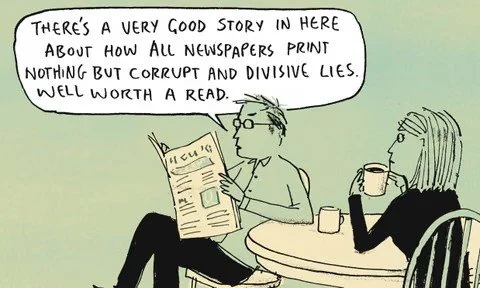
I often hear from people that they’re gobsmacked or otherwise put off by the conclusions others draw from news. Back in grade school (from what I remember), the difference between firsthand and secondhand information was taught and I’d guess this lesson would tend to influence what most know and understand about reliable evidence. An account from someone who experienced something directly would more reliably be believed than an account from someone not there to have experienced it. So, too, would the account of an expert tend to be more reliable than that of a layman. Yet, increasingly, information tends to be relayed by neither firsthand accounts nor experts but rather those designated as influencers. Citing Wikipedia used to be mocked, but nowadays people reference TikTok or a podcast as unbiased news with a straight face. Indeed, a highly contentious and recent case of misinformation being disseminated was the Lindsay Clancy trial in which many people, interestingly many women, who were influenced by social media like TikTok (per their own reports) believed the case was to determine who killed her children rather than to determine whether Lindsay Clancy was in her right mind when she did in fact kill her children; many believe her ex-husband was responsible. Such ideas are, to put it bluntly in one word, batshit. Lo, it is easy to understand why people are often gobsmacked when such ideas are so detached from reality.
There are a few caveats I’d like to address regarding my use of “news” in this here blog post. News isn’t in and of itself reality or the facts and, as I’ve already laid out, the reliability of its dissemination is variable; however, I use this term “news” here synonymously with reality and facts (or, as the title says, matter), mostly because over-using and over-emphasizing terms like “truth” or “facts” can sound supercilious as well as cause suspicion that the one using them is compensating for something (e.g., errors in their account). And, while I’ve evoked pointed distrust in online dissemination, it should go without saying that traditional news outlets like The New York Times and Washington Journal aren’t exempt from bias or errors (however, their standards are significantly more reliable than an Instagram story).
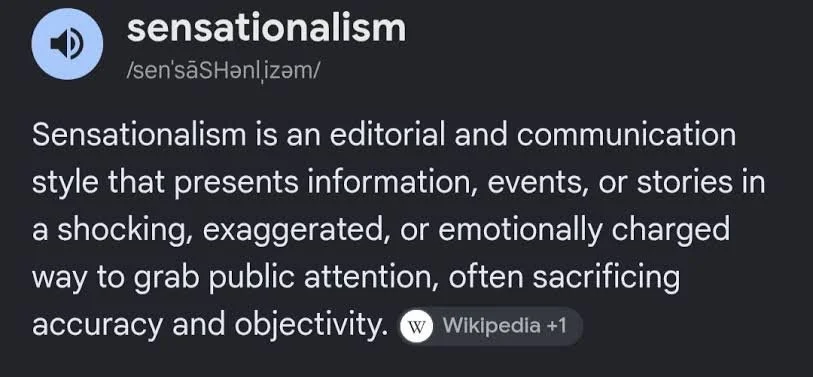
Beyond the simple precepts of the game Telephone in which what someone says to someone else changes significantly along a chain of intermediaries sharing the news their own way, online dissemination has other… influences… that shape the news. The most notable influence among them, or at least the one that immediately comes to mind, is engagement. Sharing popular things online gets attention and money (if the one sharing the news has been monetized), which incentivizes sharing things in such a way that is not entirely (if at all) truthful. That is, the news is less important than getting engagement. So, instead of sharing a story about a traffic collision involving work vehicles malfunctioning one might instead post “BREAKING! AMAZON EMPLOYEES SUFFER VEHICULAR INJURY BECAUSE JEFF BEZOS CONTINUES ENFORCING SWEATSHOP CONDITIONS!” One might reason why a simple mechanical failure might drive less engagement than the plight of the common man in an Oppressive System™. Alternatively, a headline on the same incident might read: “Woman driver WRECKS car, endangering EVERYONE!” One might notice certain consistencies between these versions of the news, such as that capital letters are attention-grabbing and that contentious agendas are woven into them. Agendas and vested interests are additional factors that drive engagement. Engagement is all the more attained via the stimulation of opinion.
Do people have opinions on faulty machinery? Maybe. But people likely have strong opinions about unfairness, harsh work conditions, sexism and other stereotypes, and personal safety. So, opinions of news tend to be more important than the news itself. Or, at least, opinions are what people tend to care more about. Social referencing—observing someone else for guidance—is a universal behavior among humans that occurs as early as infancy. It’s soothing, enlightening, or even entertaining to view someone else’s reactions or perspective on things. This is likely why reaction channels like Reel Rejects (which shares reactions to visual media) and The Fine Bros (which shared several iterations of reaction content like “Teens React” and “Elders React” (and infamously tried to trademark the term “React”)) are and were popular. I, myself tend to be disinterested in news about popular games, however I am more interested in other people’s opinions on popular games—this translates to me being unlikely to search online about such news and instead search up people like Asmongold or MoistCr1tikal to see what they think. Interest in others’ opinions is also increased when people—namely, influencers—have entertaining personalities or disseminate information in entertaining or easy-to-understand ways. Lo, it is easy to understand why people are often preoccupied with opinions over the actual news.
In what ways do people value opinions over actual matter? They can flock to their “trusted” source (e.g., TikTok, Mother Jones, Mark Ruffalo) which might tell you that the source matters more to them than what the source is sharing. They can scavenge through multiple sources which might tell you that a variety of opinions matter more than the news itself (this can also be an effective way of testing consistency and reliability between sources, or a habit of confirmation bias). They can pick and choose whose opinions to disseminate or not disseminate themselves (which can also be a habit of confirmation bias). An example that comes to mind of when news became misconstrued is the 2019 Lincoln Memorial confrontation between a student and an activist; many initially believed the student behaved reprehensibly thanks to a shortened video clip of the event being shared (notably, race, religion, and more was heavily emphasized to stoke prejudices), but a longer video (released later) disproved the student having done anything wrong and the student settled defamation lawsuits with outlets including The Washington Post.
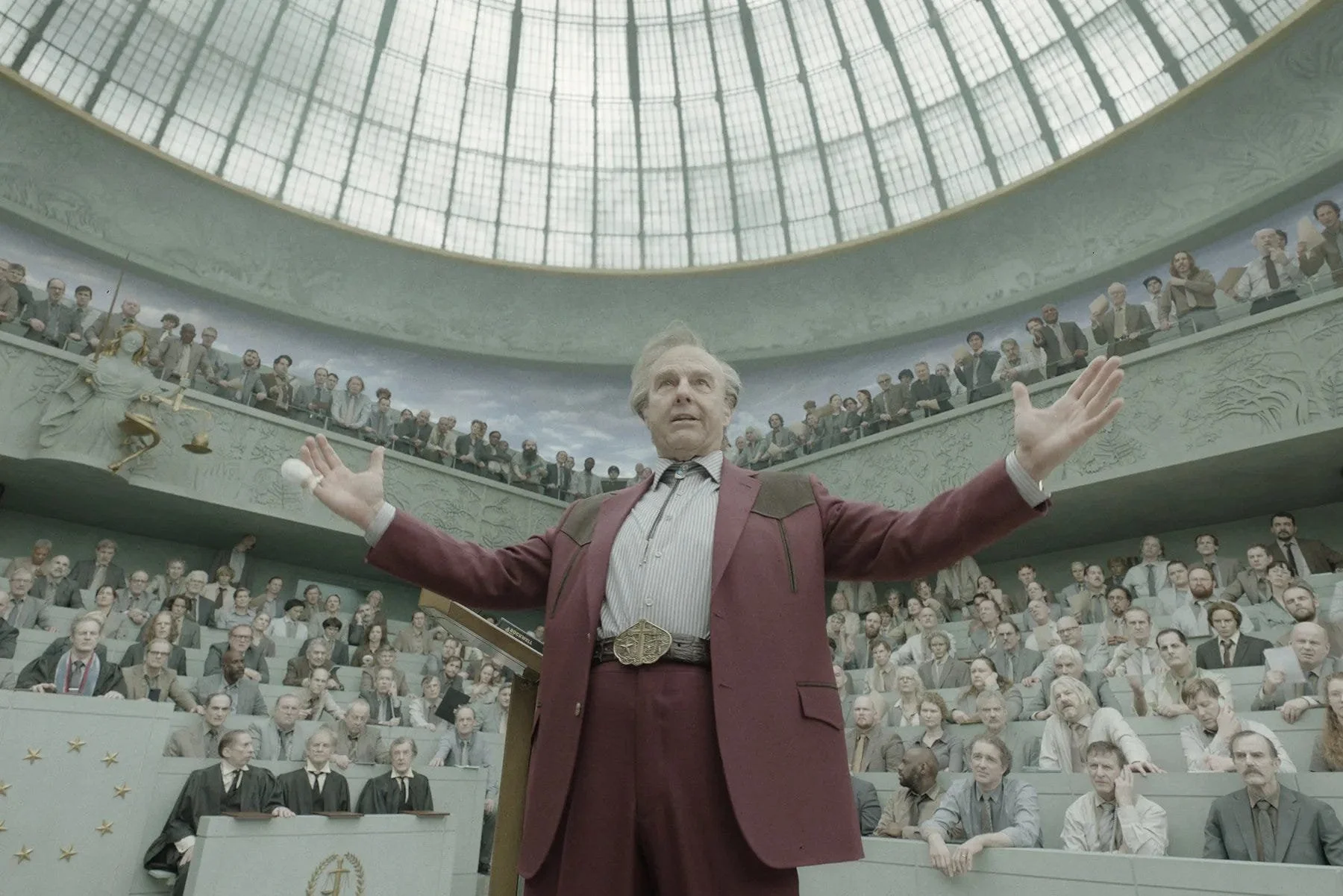
I recently saw the movie Digger and I really liked it. Why is this relevant? Well, for one thing, like a lot of this blog post, it’s fairly contentious. Actually, it’s far more contentious and is bold enough to outright insult the audience who watches it. I’ll explain (note: SPOILERS ahead—skip past the indented text if you want to avoid them). The surface-level theme or message of Digger is more or less gotten from the trailers: society’s elites are bad and harmful. Once you dig deeper, or, rather, once you stick with the film into the second and third acts the film pretty explicitly tells you what the true theme of the movie is in two significant monologues: you are bad and harmful. That is, everyone. The people who delude themselves into believing what’s true and right is the same as what they want to believe. It can be intentional or unintentional, such as when higher powers conveniently tailor messaging to leave out crucial details; but, the uncomfortable bit is, the facts are still attainable, people just didn’t bother to look. As Tom Cruise’s character Digger pithily puts it, “They know the facts. The story is yet to be told.” And this is cleverly embodied with what is arguably the film’s third twist when the events of the story, at first thought to be a fabrication as this movie is about a story within a story and Tom Cruise is playing the character Digger within a play (the first twist), which are then revealed to be based on true events (the second twist), and are then finally revealed to be questionable as to what bits are true to the actual people and events portrayed in the play—this third twist comes with the revelation that the play is a production bought and run by Digger’s descendants who are ironically profiting more off people paying to see the satire. That’s the humorous tragedy of the whole thing: people want to pay and vote for what they want, not for what’s necessarily true or good for them, and the elites who do bad things are encouraged and permitted to do as they do—by us. By the end of the movie, when the story is told and the characters take their bow at the play’s conclusion, there are numerous close-up shots of the audience, delighted by the production, and then a theater announcement says to the audience, “Level Four is in effect. Thanks for stopping by and offering some applause. Now, good luck out there,” and they all exit to go back to their dystopian lives, the movie’s soundtrack plays, and then as a final f*** you to the audience watching the movie (us) the movie’s sound cuts out with a repeat of the earlier theater announcement that compares us to the audience within the movie: “Level Four.”
Of course, Digger’s pointed criticism of its own audience and making them (us) the joke rather than the exaggerated, detestable elites portrayed in the play within the movie isn’t the only theme, and is just one that’s paralleling or nestled within others such as the quasi-cynical idea that art doesn’t really matter (as evoked by Jesse Plemons’s character (Digger’s descendant) when he monologues about how everyone bickering about the production of the play is right), but I find it to be the most compelling because when last has a piece of entertainment had the audacity to insult its own audience? (I say quasi-cynical because the same monologue also appeals to the unique influence art has on inspiring, relieving, and/or brightening people’s lives.) Tom Cruise’s monologue in the play’s United Nations scene is one I’d classify as one of the best scenes in cinema of recent decades, not least for his character outright telling viewers (again, both us watching the movie as well as those within the movie watching the play (as well as those within the play watching him speak)) “you” wanted this—the “this” being what he did, which was digging for oil, which led to the catastrophe that destroyed the environment. Is he sidestepping his own accountability? Yes, but he’s also correct in everyone being complicit and/or a hypocrite. And in the midst of his monologue, the UN’s audience begins chanting “Blah, blah, blah,” which is fascinating and exemplary of what this here blog post is entirely about: people, not just Digger, filter out what’s true to believe the story they want to be true. A final quote, also said by Digger: “Perception is reality.”
I didn’t expect to rant so much about Digger, but it’s honestly such an interesting movie that has grown on me the longer I’ve thought about it. Art and entertainment certainly is a relevant example of how stories shape people’s view of things. Anyway, I think that’s all I really want to say about optics and matter. I suppose, as an experiment, I’d suggest you go experience a thing you’ve only heard about secondhand (i.e., you know it for its reputation). Maybe it’s a person, maybe it’s the movie Digger (it’s certainly got mixed reviews). Put another way, I suggest thinking for yourself. Who knows, maybe the thing isn’t quite the same as what it’s known as.