Millennial writing is something many have heard about and blame for stories and wider entertainment taking a nosedive in their quality as of late. They’re right, of course. A factor of this contemporarily adopted approach to creating art of degraded quality is deconstruction.
My earliest memories of traditional storytelling and tropes being problematicized involve people saying they were tired of princes saving princesses and villains being straightforwardly evil. It’s funny, seeing how such sentiments snowballed into male role models and genuine evil vanishing from popular entertainment. Oh, you’re not sure what I’m talking about? Consider how Han Solo turned out in The Force Awakens, and how Luke Skywalker turned out in The Last Jedi, alongside how Poe Dameron and Finn turned out in the same franchise; or how romantic love is all but a foreign concept in modern Disney “princess” movies (e.g., Brave and Frozen where princes (and the other men in general) are buffoons and antagonists); or how previous stories are frequently adapted to vilify heroes and humanize villains (e.g., Snow White (2025) removed the prince character altogether, Maleficent changed the villain of Sleeping Beauty to be good actually, and STEPS being about how Cinderella’s evil step-sisters are actually misunderstood good people). Why is that? It’s because they have been deconstructed; your traditional heroes, villains, and values are of bygone days.
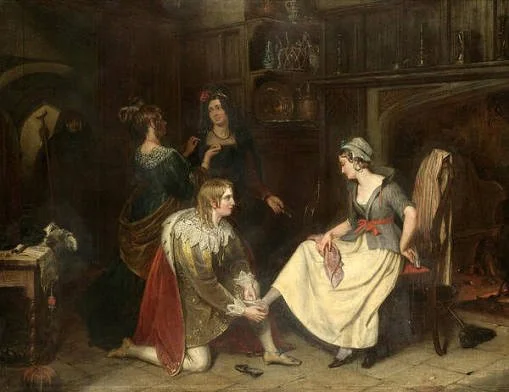
Now consider how some modern stories are successful, not merely in terms of popularity but in their actual quality. The 2015 movie Cinderella is considered one of the few (if not only) good live-action Disney remakes and it notably does not subvert, cynicize*, or revile its origins. The prince remains a character and retains good values (e.g., he is kind in the way he treats people regardless of social status and he is determined to fight the good fight for Ella). He is actually portrayed as more of a substantial character than in the original Disney animated movie; one way is how he meets Ella prior to the ball and they bond over shared experiences rather than having a love-at-first-sight thing; another way is how he has a respectful relationship with his father, the King. You see, these admirable traits don’t explicitly or implicitly chastise the original movie for its themes and tropes (nor does the story ridicule men and status), but rather add and fill in more good things that satisfies the audience by giving it a fuller story.
*Cynicize is a word I made up that means (1) to make or become cynical, or (2) to treat in a cynical manner.
While Cinderella released a little over a decade ago, I still consider it to be “modern”. I’m sure there are more examples from western entertainment, however I now turn to examples from the east (i.e., Japan) as such non-western places are relatively untainted by Millennial writing (for now) and have a lot of what modern audiences covet in the way of traditional storytelling and values. This isn’t merely my opinion: manga outsells comics and western graphic novels by quite a bit. You may have noticed library and bookstore shelves having more manga in stock than comics. Anime, too, has seen significant rises in popularity over western cartoons. Setting these trends aside, I’ll return to examples of good storytelling: consider My Love Story!!, a shoujo in which the male protagonist is heavily masculine and the female protagonist is heavily feminine and their relationship is wholesome as opposed to being toxic, lewd, and full of bitterness and resentment that’s more typical in western media; and consider My Hero Academia, a shounen in which both male and female protagonists share heroic values and feats but retain nuanced masculine and feminine traits that aren’t treated with sarcasm, irony, self-debasement, and cynicism that gives way to melodrama as is more typical of western media. Why do audiences covet non-western media? It’s because quality storytelling, values, and tropes have been retained, perhaps even reconstructed; your traditional heroes, villains, and values are not (entirely) a thing of the past.
So far I’ve been somewhat elusive in defining deconstruction and reconstruction, aside from what you’d infer the words to mean in the way of involving some sort of construction. Generally, yes, they both mean different (opposite, really) ways of constructing something, in this case stories: deconstruction means breaking apart features of a story, which can include removing or calling attention to such features like genre, tropes, archetypes, etc.; reconstruction is the reintegration and rebuilding of said features, which can include returning or replacing said features. Naturally, when you use deconstruction as a means of storytelling, you get the kind of things aforementioned: self-aware and self-referential, heavily ironic and cynical, and insincere and superficial stories. With reconstruction (or any other approach of storytelling that simply utilizes storytelling features without ulterior motives), you get the kind of “traditional” stories aforementioned: grounded, straightforward and idealistic, and sincere and multi-thematic stories.
You might be wondering why a deconstructive approach is superficial compared to a reconstructive approach, as it seems far more sophisticated to highlight and criticize storytelling features while simultaneously using said features to tell a story. The reason is because most of the time deconstruction becomes the point of said stories that use deconstruction. Whatever else a story has to offer is debased and diminished because the genre, characters, tropes, and whatnot are inherently being deconstructed (e.g., the lack of character given to Cinderella’s prince is called attention to, mocked, or his character is thrown out entirely). Metaphorically, deconstruction throws a wrecking ball at a brick wall and points out the quality of each individual brick and how well all the bricks align together without putting them to further use. There are exceptions to deconstructive storytelling that also include reconstructive storytelling, or stories that don’t simply take themselves apart but also replace what’s broken with something substantial—the immediate example that comes to mind is Into the Woods in which characters and themes are highlighted and mocked but also changed/replaced to provide new depth and meaning (e.g., the idea of wishes and similar miracles truly solving problems being questioned/subverted, the princes being self-absorbed not merely serving as criticism of vapid character-building but also providing other themes like vanity as well as supplementing other characters like Cinderella and The Baker’s wife). In sum, reductively, a story that uses deconstruction can be appreciated for laying bare its own components for the audience, but can’t really be valued by the audience; a story that uses reconstruction can both be appreciated and valued by the audience.

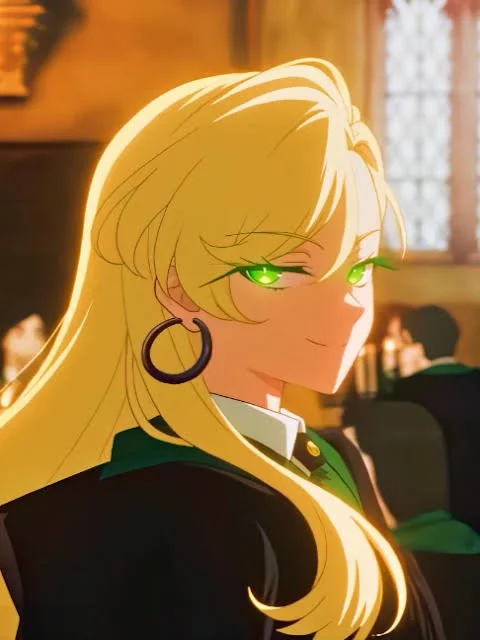
A funny but entirely relevant example of reconstruction happened online with fan-canons and AI in which people recreated Harry Potter with a female Malfoy—Dracaena/Malfoid. It touched on some of the very things I’ve discussed here: a yearning. There is of course yearning for quality storytelling, but there is also the rekindling of forgotten feelings in the hearts of young men that which embodies this Malfoid phenomenon. Do recall and note the trend in modern deconstructive storytelling that cynicizes certain tropes and values including gendered behaviors (often in ways that ridicule male characters and masculinity alongside unrealistically and aggravatingly turning female characters into girlbosses), as well as recall the traditional gendered behaviors, values, and tropes occurring in the more popular stories of eastern cultures. There is reason Malfoid is often visualized in anime-style: it is because she is attractive, feminine, and wholesome (see this very relevant blog post on chivalry). Malfoid has additional depth to the pride characteristic of J. K. Rowling’s Malfoy has beyond just his family’s status and prejudices—Malfoid is a tsundere. She also improves shortcomings and gaps in the original story, such as giving Malfoy and the Slytherin house in general a more satisfying redemption arc, but I’ll leave that to the fans driving the Malfoid phenomenon to explain in better detail.
Without necessarily bringing gender warfare into the equation, it still remains relevant to bring up other trends beyond preferences for western vs. eastern stories such as trends in male and female audiences when it comes to fiction: over recent years, male readership (particularly in fiction) has decreased. I wouldn’t hyperbolize this trend as a crisis (I would, however, consider declining quality in general education and literacy as a crisis), but it is worth considering how this trend may at least suggest males having had their interests pulled to alternative sources (e.g., eastern entertainment, nonfiction). I would further suggest certain trends in storytelling as not exactly catering to male audiences.
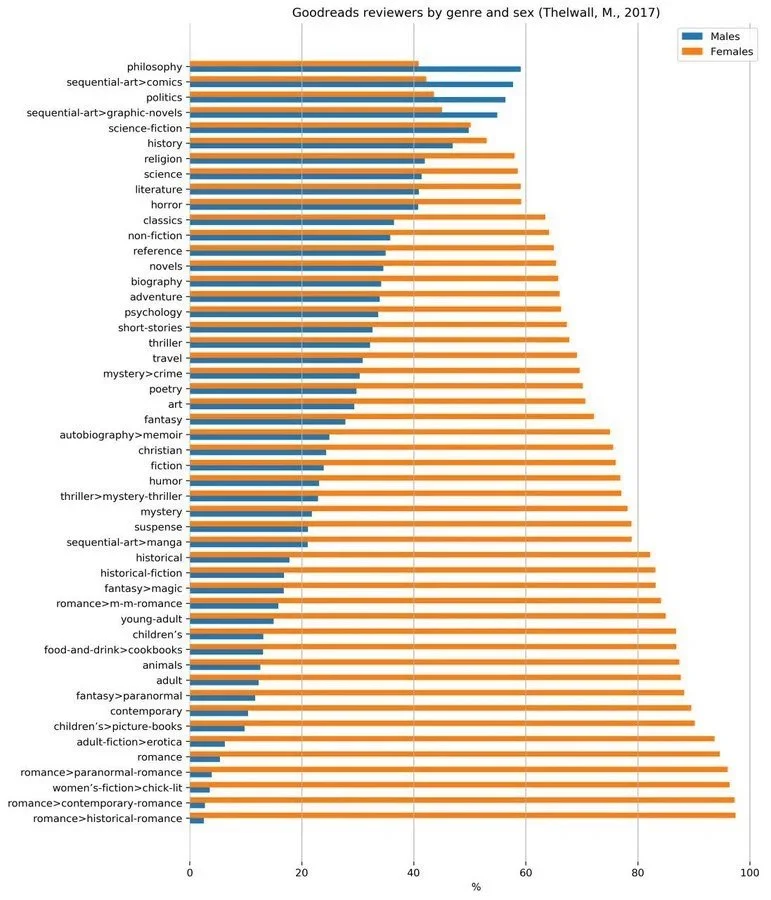
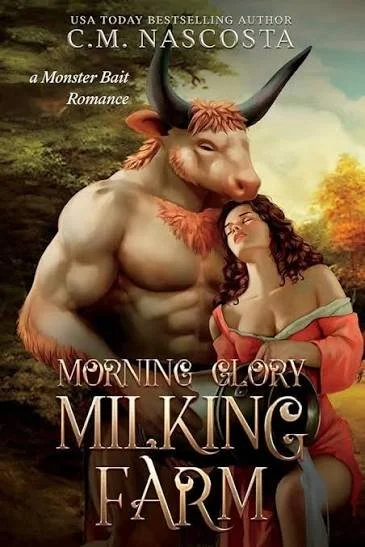
Around 80% of romance authors are female, and the percentage of romance’s female audience is even greater (to say nothing of how overrepresented women are in the publishing business). This doesn’t mean romance itself is a turnoff for guys—it more likely means typical modern romance stories such as “Morning Glory Milking Farm” don’t appeal to men. Which brings us back to Malfoid. Why does she appeal to men? The answer was already given: she is attractive, feminine, and wholesome (among other things that excites the known story beats of Harry Potter (e.g., the Sectumsempra bathroom scene, the Battle of Hogwarts)). Malfoid doesn’t promote the vulgarities of smut and lewdness… perhaps I’m broaching an uncomfortable topic on what’s appealing to women in fiction, so I’ll leave off there. What I’m really calling attention to is how trends such as in romance are emblematic of modern storytelling features at large being unappealing to men if not people in general. Malfoid returns—reconstructs—the stories men (and arguably everyone) yearn for, those with ideals of love and bravery. Just look at this video and tell me you don’t feel anything in your soul. I reiterate: Malfoid represents yearning, yearning for better values, better themes, and better stories.
November is here, which means stories and storytelling have been on my mind. I must now go forth and write, as November is the month I try to challenge myself to write more stories in the spirit of NaNoWriMo. Adieu for now.