Backtracking: A Neglected Art
People crave novelty in gaming, not some boring, mundane, useless rehash of the same thing, so what’s the point of going back to the same place? Games ought to offer new places and things! Or do they? Dun dun dunnnn!
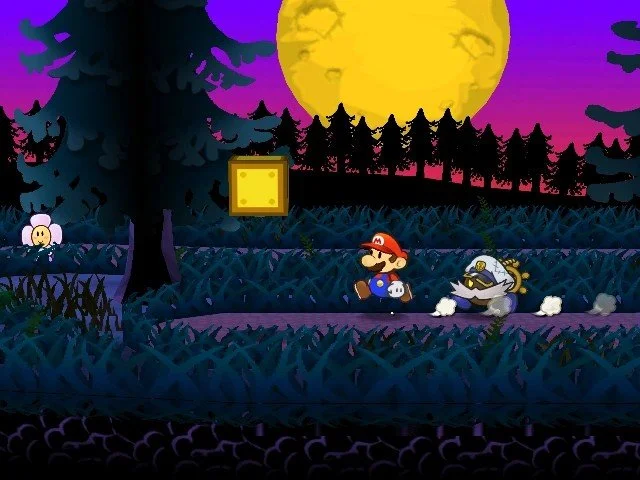
I’ve been fairly outspoken about my dislike of modern The Legend of Zelda games for having an open world and offering an abundance of places to go. Aside from the few hubs where a player restocks on items and whatnot, the games are a constant experience of going to new places without any need to go back. As such, the various places in Breath of the Wild (BotW) and Tears of the Kingdom (TotK) are akin to noise. I’m hard-pressed to think of a single place in either game that offered something more than a single-use purpose before becoming obsolete or wasn’t merely space to be traversed.
On the other hand, games like Mario offer discrete levels that are linear. Each level (usually) has a lot going on and returning to any one several times will likely involve different things of note. Off the top of my head, the first level of Super Mario World has two possible routes that involve either simply running right or going down a warp pipe. I haven’t played that game in over a decade, and I still remember that simple nuance. But, for some reason, even though games like BotW and TotK have the benefit of recency, their various areas are largely immemorable to me. Weird, right?
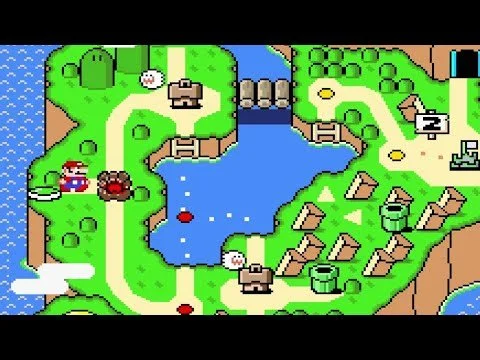
Not really. Super Mario World stands out because I replayed it a lot. I replayed it a lot because the levels offered a lot. Earlier I compared modern Zelda areas to noise, and I’d like to highlight what makes those games “noisy” while Mario levels that have a lot going on aren’t. To me, the “noise” in Mario games is controlled. Zelda game noise is uncontrolled—the areas are rampant, simultaneously being overstimulating and underwhelming. That’s the beauty of linearity: you have cohesion and direction, but you have the ability to subvert these expectations or “rules” and do different things and go different paths. With an open world, you’re already expected to do whatever you want so anything you do lacks the novelty of being done after not being able to do it before. I say this without even mentioning one of the primary reasons replayability and backtracking are satisfying: progression.
Even something so simplistic as Mario where you go from one side of a level to another provides something interesting to go back and do once you’ve progressed enough in the game. Again, taking the example of Super Mario World, some levels are changed after you hit the red, yellow, blue, or green ! switch in a Switch Palace. Places or items in those levels that were once unavailable are suddenly available. Such a simple change, yet delightful. Taking a more recent example, Kirby Air Riders City Trial involves only one place. Every round of City Trial is the same place, yet every round offers something different. Maybe the environment is slightly altered, maybe unavailable areas in one round are available the next round, maybe different items or machines spawn, and maybe different events happen. That the same place offers something unique and interesting every round, every time, speaks to the potential just one area has. All of this is before we account for progression—once certain achievements have been completed, new machines become available, including one that can devastate the city of City Trial.
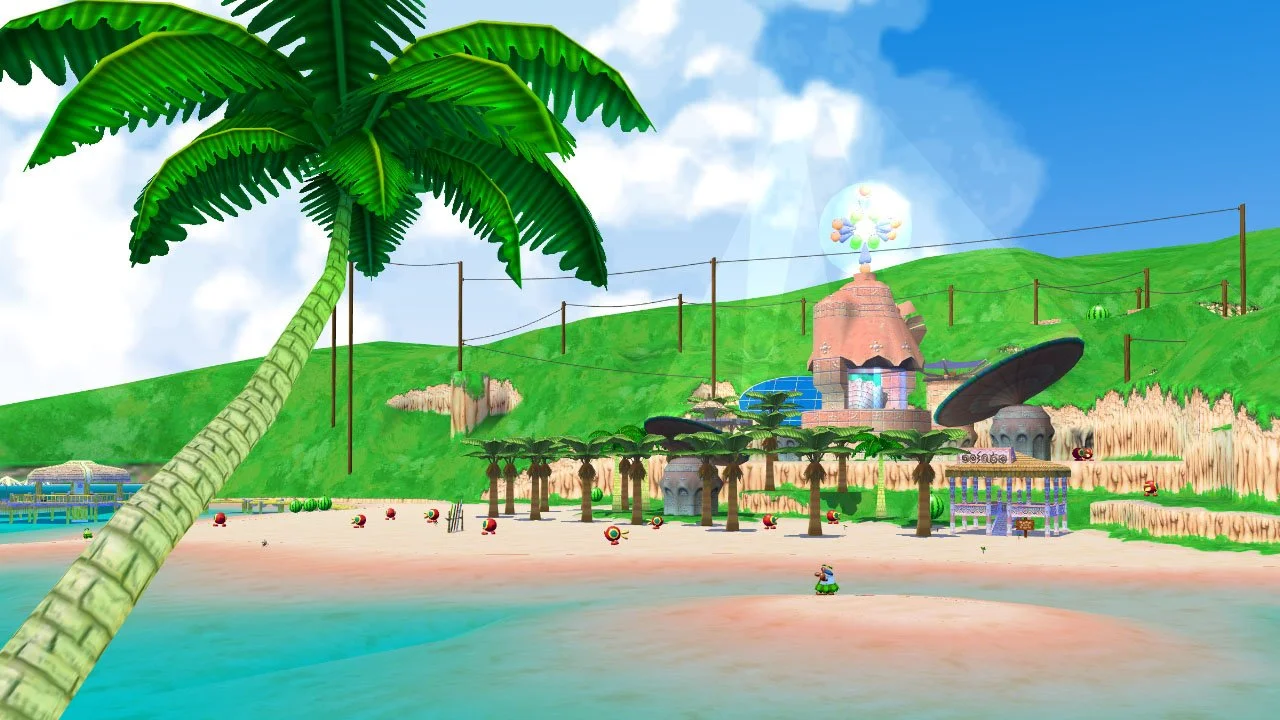
The novelty progress provides to “old” areas to make them “new” when you backtrack isn’t the only thing progression does. If done exceedingly well, an area that has changed enough through progression may cause a player to long for the “old” version. This can lead players to go back to an earlier version or even restart a game to reexperience it all again. In essence, progress turns a straightforward area into something much more. In Mario, a level isn’t so much a “level” as it is an environment or, dare I say, a world. (Note the irony in BotW and TotK being “open world” and not having this lush, developing quality that a linear level has.)
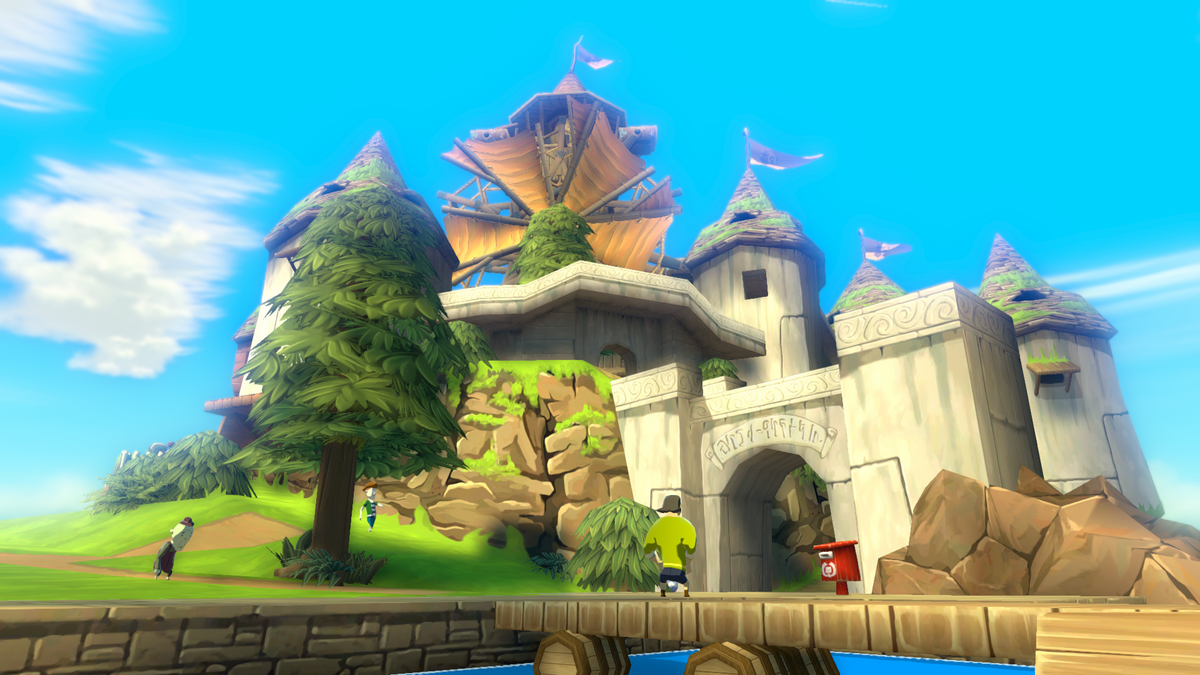
There are two personal favorite games that give great examples of backtracking done beautifully in the Zelda franchise: Skyward Sword and Wind Waker. In Skyward Sword the only places that don’t involve (necessary) backtracking are nondescript sky islands; outside of those, every area you come across has a reason to return to it (e.g., Skyloft, Pumpkin Landing, Skyview Temple). Skyloft itself has various events that change what’s available throughout the game including Batreaux’s home becoming available, gratitude crystals appearing, new items and upgrades in the Bazaar becoming available, various side quests becoming available, and the island itself reshaping to reveal the final dungeon Sky Keep underneath the Goddess Statue. Depending on the visit, Faron Woods involves pursuing Zelda into a dungeon, undergoing the Goddess’s trial in the area’s Silent Realm, or draining the woods after a dragon flooded them. Each visit there, or to Lanayru Desert and Eldin Volcano, involve new events, new characters, unlocked area(s), and unlocked item(s), all of which progress the game in some way. (An exception to my liking for this game is the repetition of The Imprisoned boss fights.) As for Wind Waker, there’re arguably fewer significant reasons to backtrack to certain islands (e.g., taking photos with the Picto Box, trading with the Gorons, finding Tingle statues), but even ignoring those delectable side quests that add optional flavor there are significant and necessary reasons to backtrack: Windfall Island offers a jailbreak for Tingle (who helps with collecting Triforce shards later), a plundering of a passing pirate ship for bombs, nightly auctions for various important items, and rags-to-riches and riches-to-rags families who offer different things (like an empty bottle and heart piece) among many other side quests depending on your progress. In sum, these games demonstrate the delight in areas that aren’t one and done.
As this is sort of a love letter to backtracking, I’d like to go back to the basics of an area. An area that has one or two things going on is a lot less interesting than an area with three+ things going on. For instance, a generic forest in BotW can have hidden Korok #666 as well as an apple tree, maybe, while a level in Super Mario World can fairly reliably have coins, dragon coins, an underground or sky to traverse, a warp pipe or three, a secret exit, a variety of enemies, and a mushroom, fire flower, or cape item. I’ve been so far using Mario as a meter stick to compare modern Zelda to in order to highlight how even the most basic of linear games can outpace the seemingly best of open world games. I’ve already ranted about why past Zelda, what I consider to be the best of linear games, is superior to modern Zelda, so I won’t compare either any further. If you want that, feel free to check out my blog posts on BotW and TotK. As for this post, I think it’s clear how depth to areas in a game makes for a more immersing game and more than justifies backtracking. Such involved areas are inviting, almost like they’re asking you to go ahead and take your time, bask in their intricacies and whatever else they have to offer, live in them for a while… and come back for more later.