If You Break It, They Will Leave
Creating a product is no small feat, and maintaining demand for it is tricky. Creators face a dilemma: create more of the same and risk stagnancy, or create something new and risk the loss of goodwill. The ideal is that creators thread the needle in providing novel features that do not compromise the desirable “identity” of their product. As an ideal, it’s impractical due to products never being universally appealing, and so changing a product typically if not inevitably breaks it.
There are plenty of franchises whose “identity” or core features got lost or warped. I’ve expounded on several of them several times (e.g., Avatar: The Last Airbender, Star Wars), and following a recent Nintendo Direct it is very topical to expound once again on one of my favorites: The Legend of Zelda. A remake of Ocarina of Time (OoT) was announced to cap off the Direct and audience reactions have been mixed from optimistic excitement to skeptical criticism. Some of the positive reactions speculate the game will feature an open world and retold story to add fresh flairs to the series’ arguably most beloved game; some of the negative reactions speculate the same things only with unfavorable opinions. While I’ve expressed my share of criticisms with the Zelda series’ latest two titles (i.e., Breath of the Wild and Tears of the Kingdom) and its new open-world and sandbox identity as fundamentally no longer being Zelda, I don’t actually sit in either camp of opinions when it comes to OoT. To me, it’s a re-release of a game in the series I have little-to-no attachments to. Whether it spells stagnancy or a broken identity for Zelda is yet to be seen, and for me it will only be seen when the next new installment gets announced/released. Though, comments from the series’ developers don’t inspire hope.
“Well, I do think we as people have a tendency to want the thing that we don't currently have, and there's a bit of a grass is greener mentality. But I also think that with the freedom players have in the more recent games in the series...there still is a set path, it just happens to be the path that they chose. So I think that that is one thing I kind of like to remind myself about the current games that we're making. But also, it's interesting when I hear people say those things because I am wondering, ‘Why do you want to go back to a type of game where you're more limited or more restricted in the types of things or ways you can play?’ But I do understand that desire that we have for nostalgia, and so I can also understand it from that aspect.”
Eiji Aonuma on Zelda in 2023 interview
Before ranting about my view on this quote, it is entirely possible that what was said was not accurately conveyed due to shortcomings of translations. So, while I will be interpreting what was said at face value to avoid misinterpretations, it is still prudent to take my interpretation with a grain of salt. What Aonuma starts to say I agree with: there is a grass is greener mentality, and people tend to idealize the things they don’t have while faulting the things they do have. What Aonuma continues to say I disagree with: open-world games fundamentally lack a set (i.e., linear) path, and reasoning that the path a player chooses makes it set is sophistry. What Aonuma ends saying I disagree with: it is not mysterious at all why people want “limited” or “restricted” (i.e., linear) games, especially from a series whose identity is its structured linearity, and nostalgia isn’t the sole reason why people want such games. I’ll sum up the reasons by identifying Zelda’s core elements (see this rant if you want more details): dungeons, progression, story, key items, backtracking, and single-solution puzzles. Again, I’ll grant there’s possibly shortcomings to what was translated of Aonuma’s comments, but it is troubling if not insulting to see a prominent Zelda developer fundamentally not understand why people liked previous Zelda games. Huh… a game creator opposing his creations sounds oddly familiar…
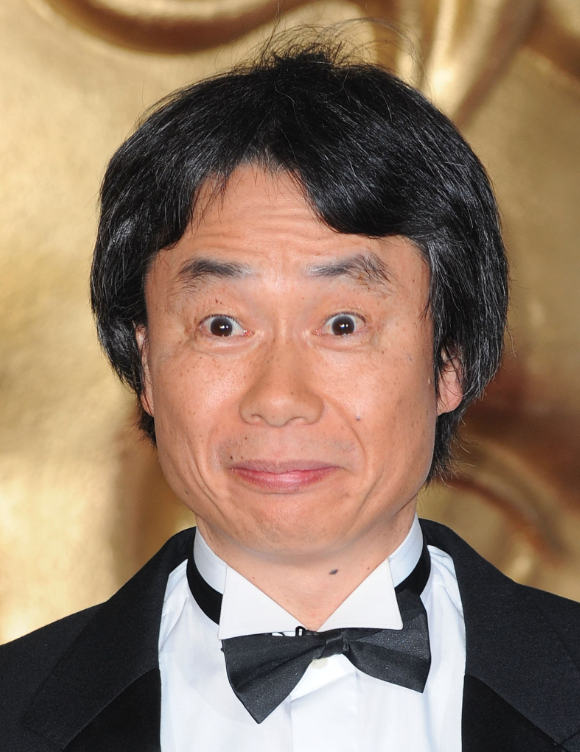
I will merely allude to there being common themes with Mary Shelley’s Frankenstein without explicitly describing them.
Paper Mario is another franchise I hold dear and one I’ve ranted about in the past. Not including The Thousand-Year Door’s remake, it’s one I’ve given up on and have not touched since Super Paper Mario was released due to it forsaking its core (RPG) elements and adopting alternative things (e.g., action, gimmicks) I don’t care for. I bring this up because it’s exemplary of a product breaking and losing its goodwill (i.e., target audience).
And of course, how could I discuss the loss of goodwill without mentioning Disney? Well, I suppose I’ve indirectly mentioned them with regards to Star Wars, however there are numerous other products they’ve broken. Mulan, The Little Mermaid, Indiana Jones, Artemis Fowl… the list goes on. The list of other creators breaking their creations also goes on, like Warner Bros. (Justice League, Suicide Squad), Peter Jackson and New Line Cinema (The Hobbit, The Rings of Power), Netflix + Nickelodeon (what a surprise, I was right about Avatar: The Last Airbender season 2), and Ridley Scott (all movies after Alien (this may be contentious, but I don’t see Aliens as being the same kind of movie as Alien at all)). As with my blog about the paradox of wider appeal, this idea of broken franchises does not necessarily mean the products are bad—they’re just broken in terms of no longer meshing with their core features (i.e., origins). Which, of course, leads to people who liked those features leaving the changed product behind.
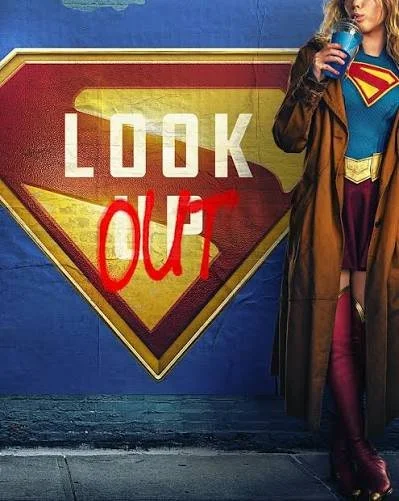
On a related note, the movie Supergirl recently released and bombed. The question is: why did it bomb? Some say it’s because the story betrayed its source material Woman of Tomorrow. Others say it’s because of superhero fatigue. More say it’s because the writing and other elements of the movie were bad. Yet more others say it’s because of the lead actor Milly Alcock’s marketing approach, that strangely resembled Rachel Zegler’s approach with 2025’s Snow White, which both pinned an irrelevant political agenda to the film (i.e., signaled Millennial writing) and insulted potential audiences (e.g., males, Christians). My opinion is that to some degree all of these reasons are correct in addition to poor reviews not doing it any favors; it’s a pretty bad idea to insult audiences, particularly those who are the target audience for comics and superhero content (i.e., males), which would naturally drive them away; but, I think the biggest reason is the movie did not promise a faithful and appealing piece of entertainment. Personally, I wasn’t a fan of Supergirl’s crude behavior teased at the end of 2025’s Superman, and I was not impressed by the initial promotional material emphasizing the character’s girlboss personality—given how the rest of the movie’s preceding marketing emphasized a political agenda (i.e., feminism) and how proceeding excuses further carried that agenda in displaying general anti-male sentiments (despite men making up the majority of the people who went to see the movie in theaters), I’d say my apprehensions were spot on. In sum, as with Snow White (2025), Supergirl made an effort to be something new, and in effect broke itself and caused the audience to leave.
How, then, do creators thread that needle between new and old? Is it possible? In my opinion, it is possible only for so long. Eventually the product will reach a breaking point where it becomes stagnant (and loses its target audience due to franchise fatigue) or it has to become something completely different (and lose its target audience due to the franchise betraying itself). In the former cases you get series like Leprechaun which drag and devolve into 8 movies including Leprechaun 4: In Space and Leprechaun in the Hood, and in the latter cases you get series like Zelda and Paper Mario which wear the skin of their iconic appeal without their core features. Here is my novel idea for creators on how to thread the needle: don’t. Simply stop making updated products of the same thing. Make a new product. You can even keep the core elements of previous products, just stop attaching them to Zelda, Mario, or, heck, Leprechaun.
There are some caveats I’d like to mention here at the end of this blog post. Audiences in ways change over time, and so it can be possible to endlessly create versions of the same product given children or new people are attracted to and demand the continuation of the product. Audiences in other ways don’t change over time, and so it can be possible to endlessly create versions of the same product given the same people remain attracted to and demand the continuation of the product. It is truly wonderful to have the endless fascination of a child and to remain delighted even in recurrences. On that note, here is a quote from the Greek philosopher Heraclitus:
“Man is most nearly himself when he achieves the seriousness of a child at play.”